



a publishing company Vol.2 Hiroki Nakano, University of Tokyo Press
Published date: January 30, 2026
Corrected date: February 9, 2026
... We have corrected the omission in the title of the second of our company's recommended products. Thank you to the reader who contacted us.
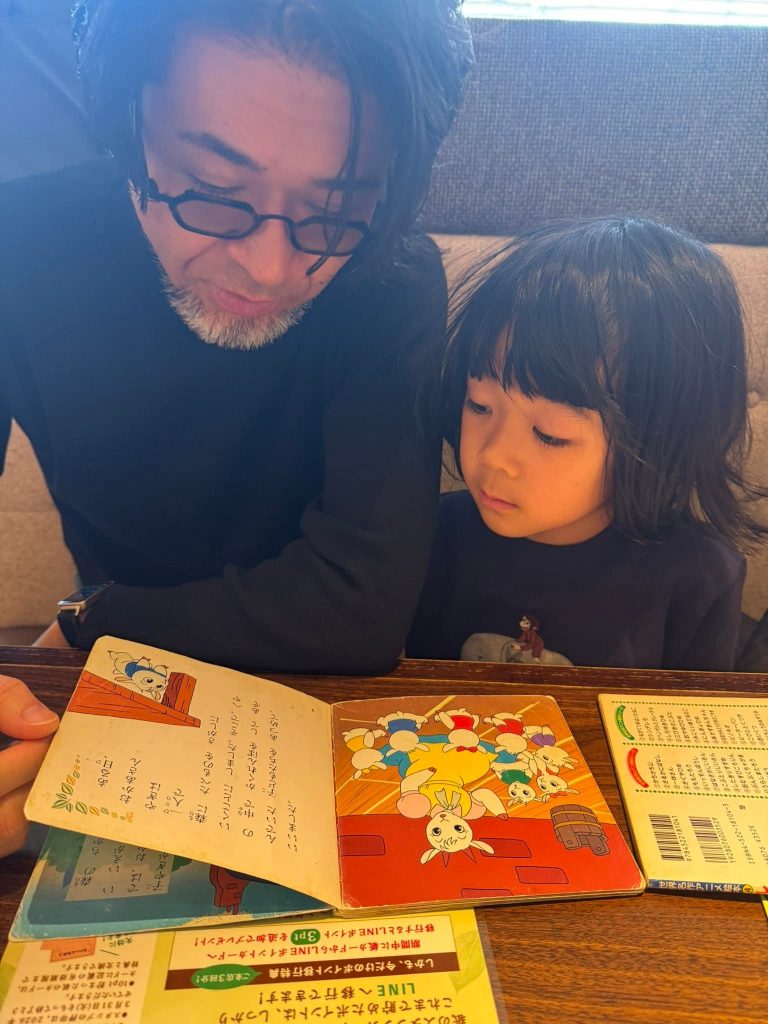
■Name:
Nakano Hiroki
■Faculty and major at the University of Tokyo:
2000 - Enrolled in undergraduate studies (Humanities, Type 3, Chinese language selection)
2002 - Faculty of Letters, Department of History and Culture (Japanese History major)
2004 - Master's course at the Graduate School of Humanities and Sociology (Japanese Cultural Studies, Japanese History)
September 2010 - Completed doctoral course at the Graduate School
■Current publisher:
University of Tokyo Press, a general incorporated foundation
Website: https://www.utp.or.jp/
■How I spent my university years:
I came to Tokyo to attend university and lived alone for the first time (I'm from Okayama Prefecture). I lived in a student apartment along the Inokashira Line, which was introduced to me at a property tour organized by the university co-op. All the residents were University of Tokyo students. I imagine that properties like this are rare these days.
In my third year of undergraduate studies, I moved to a place with easy access to the Hongo Campus, but I preferred the atmosphere along the Inokashira Line, so I returned to the same apartment when I entered graduate school. Having lived there for so long and become friendly with my landlord, I was given special permission to stay there for a while after I started working. Then, the University of Tokyo Press moved from the Hongo Campus to a location adjacent to the Komaba Campus, and
I remember realizing that my life was destined for Komaba. After specializing in modern Japanese history as an undergraduate, I spent most of my time searching for and reading documents and historical materials, and mastering how to read cursive writing. I
was introduced to part-time jobs through research, organizing materials at the National Diet Library and several museums and archives, and writing questions for an education-related company. I also worked part-time in a publisher's returns warehouse.
During my doctoral studies, I had the opportunity to work part-time as an editorial assistant at the publishing company Mishimasha. This was when the company's headquarters was located in a house in Jiyugaoka. A friend of mine worked at Mishimasha and asked me to help out because they were publishing a book by author Matsumoto Kenichi and the proof copies (galleys) had so many red marks that they were difficult to read and understand. They asked me to help out because I majored in Japanese history and could read cursive writing. That was the start of my helping out with various books over the next few years. It was fun. If I hadn't had the experience of working part-time at Mishimasha, I don't think I would have considered working in the publishing industry later on.
■My involvement with books and the Co-op Book Department during my university days
In terms of my major, I was always reading books, documents, and historical materials (both printed and unprinted), so I was always surrounded by books. Around the time I was a student, an increasing number of services, such as Tohan's e-hon and Nippan's Honya Club, began allowing you to specify a pickup store for online book orders. I used the latter in particular often, as it allowed you to specify the Co-op Book Department. My
favorite bookstore was Shohara Asagaya. I loved the feeling that the store was crammed with books. It wasn't just that there were a lot of books, but the size of the store, the layout of the fixtures, and the way the shelves were displayed combined to make me feel like "it's fun to be surrounded by books," and whenever I went, the books were in stock and arranged in a way that made me think, "Oh, there are books like this too!" It's no longer there.
■What led me to choose the publishing industry
Although I progressed to a doctoral program, there were several times when I felt that I lacked the will to give up other things in order to devote myself to research. In other words, I felt that I just couldn't generate enough motivation from within myself to focus on my research. Before continuing to drag on like this and reaching a dead end, I thought it would be better to acquire a skill, so I decided to look for a job in an industry that would most accurately and highly value my career up to that point. I happened to be looking at the University of Tokyo Press website and saw an ad for someone with sales experience, and I thought, "This is it." In terms of my experience, I had only worked as an editorial assistant at Mishima Publishing, so I didn't meet the requirement for sales experience, but I thought, "If I don't succeed, I'll just be rejected," so I applied and was hired.
■What kind of work do you do?
For the first 10 years, I worked in sales. When I say sales, I mean everything "necessary for books to be distributed to the world," so I didn't just do typical bookstore sales, I also did a variety of tasks related to distribution management, answering the phone, and managing and updating the website. I also worked on social media for a few years. I've
now been transferred to editing, so I create plans, mainly in the humanities, and receive manuscripts. I manage the entire process, from creating books with the help of printers, bookbinders, designers, and various other people.
■Characteristics and Appeal of the Publishing Company I Work For
Helping to deliver research results from the University of Tokyo to the world in the form of books is our organization's greatest mission, and I believe it is unique in that it is unique (though it is our "greatest" mission, there are no restrictions on who we actually work with). I was not able to become a researcher myself, but during the training process, I experienced firsthand the challenges and passion of those who devote their lives to the act of research. The empathy I gained from this experience is part of what motivates me today, so this mission is also the greatest attraction for me.
At the same time, communicating the content and value of research results to the world requires approaches and perspectives other than the research itself. Even understanding content outside of my student specialty can be difficult, but I struggle to understand it. I accompany the authors, asking myself, "How can I convey the appeal of this research to others? What thought process do the authors have and what do they value?" and then finally releasing the book into the world gives me a great sense of accomplishment.
There are many people at the University of Tokyo Press who are not graduates of the University of Tokyo, but I happen to be a graduate of the University of Tokyo, so I have many opportunities to help people who have a direct connection with me, and I often feel a sense of fulfillment both professionally and personally.
■My impressions of working in the publishing industry
The time you get to interact with the book itself is surprisingly short. In editing, the amount of work and time spent interacting with authors over materials before they become books is overwhelmingly greater, and most of the sales work is "setting the stage so that books can be distributed to the public and bought." There are probably many people in the industry who love books, and I think that loving books is very important, but I get the impression that people who find joy in the act of "taking people's thoughts and putting them into some kind of form" and in operating "a system to distribute things well" are the ones who work enthusiastically.
■Recommended Products and Reasons for Our Recommendations
: 1.
"Modern Japanese History: From the Meiji Restoration to World War I" and 2.
"Modern Japanese History: From the Interwar Period to the End of the Cold War"
(both scheduled for publication in late March 2026).
We wanted to create a textbook on modern Japanese history with young and mid-career researchers that would make both authors and readers think, "I wish I had studied this book when I was a student." We believe that a textbook that helps readers understand the roots of the complexity of the society we live in today and cultivates the ability to think for survival is essential for all people, regardless of whether they study history academically. This text teaches us that the first step is to ask questions.
2.
Hiroshi Takayama's "The Mysterious Medieval Kingdom: The Crossroads of European, Byzantine, and Islamic Cultures."
Since the first item is scheduled for publication (sorry), we'd like to recommend another previously published work.
When I first started attending Komaba, I was deeply moved by Professor Takayama Hiroshi's lectures in Building 11, which made me realize, "So this is what it means to turn research into a lecture." I vividly remember Professor Takayama speaking timidly yet confidently in front of a slide of a stone tablet inscribed in four languages, describing the process of deciphering and interpreting it, and how he overcame previous research. I went on to study Japanese history, but the influence of Professor Takayama's lectures on Western medieval history at Komaba is immeasurable. This book was assigned as a supplementary reading for the lecture, and he must have based his lectures essentially on the content summarized in this book, but I wonder if I was so moved by just reading the book. The cover, which makes use of Kay Nielsen's elegant paintings, is also beautiful.
■A recent trend in the publishing industry
is the shift towards B2C advertising. In a society where everything competes for consumer resources via smartphones, it appears that each company is making efforts to ensure that information about books is delivered to target readers and that they are encouraged to make a purchase, in a way that is linked to the strengths of their publications. I have previously written
an article on this issue titled "Creating Promotion for Academic Publishing," so if you are interested, please take a look at this interview as well
*Japan Association of University Presses, University Press, Issue 120 (November 2019)
"Special Feature: The Current State of Publishing Promotion"
https://www.ajup-net.com/wp/wp-content/uploads/2019/12/ajup120_all_191130.pdf
■A book I would like Tokyo University students to read:
Koga Fumitake, "Collective Shallow Thinking: Why Do 'Once-Excellent Men' Go Wrong?" ' (Diamond Inc., 2025)
Irving L. Janis, 'Groupthink: A Psychological Study of Policy Decisions and Catastrophic Failures' (Shinyosha, 2022)
Many of the University of Tokyo students reading this interview will likely one day be involved in decision-making in some organization. You can never know too much about the strength and frightening dynamics at work in closed, homogeneous, and non-diverse groups.
■Message to Tokyo University students:
"Don't choose the right answer, make what you choose the right answer."
It's rare in life for the outcome to be irreversibly determined the moment you make a choice. What's important is the process before and after. If you can think like this, you should be able to strike a good balance between the ability to realize what you strongly desire and the ability to adapt to unexpected opportunities that arise through chance or connections with others.
<end>
Vol.3 is scheduled to be released around the end of February.
A list of articles can be found on this page
○Planning and Management: Komaba Book Club, University of Tokyo Co-op
If you have any inquiries or comments about this project, please send them to us using this form
