



Interview with a University of Tokyo graduate working at
Zenzen
Release date: December 22, 2025
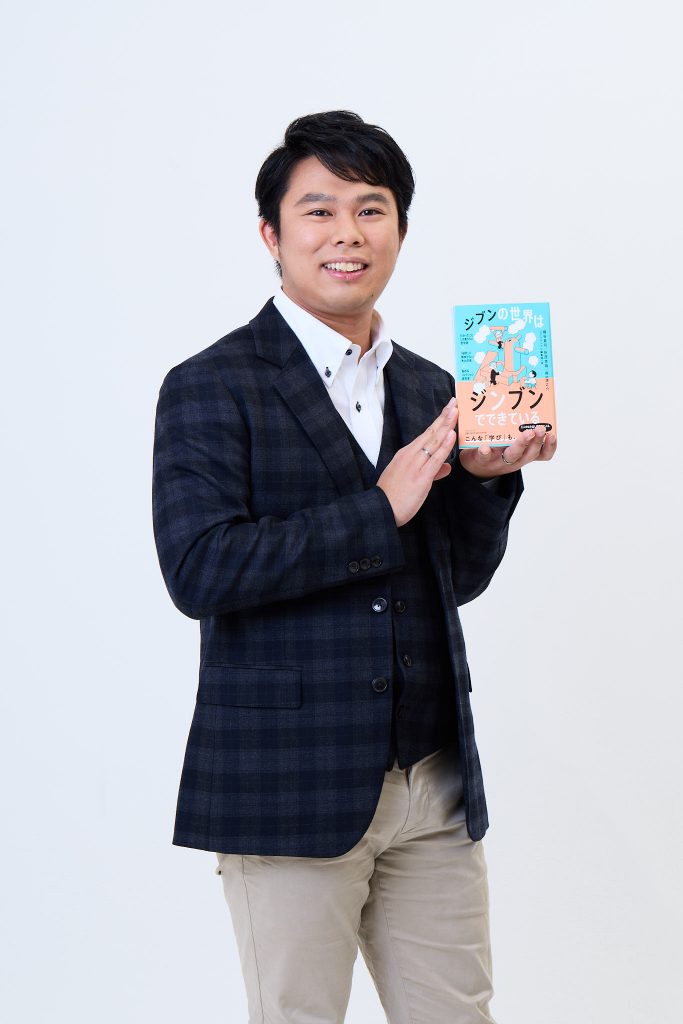
■Name:
Akira Harada
■Faculty and major at the University of Tokyo
: Faculty of Engineering, Department of Civil Engineering
Graduate School: Graduate School of Engineering, Department of Civil Engineering
■Last year at the University of Tokyo: Undergraduate
graduate in 2018,
Graduated from graduate school in 2020
■Currently employed at publisher
Jibunjinbun Co., Ltd.
Website: https://jibunjinbun.com/

■ How I spent my university daysAfter
enrolling in the Faculty of Science, I went on to study in the Department of Civil Engineering, Faculty of Engineering. In the second semester of my second year, I moved to the Hongo Campus. However, because my lab was spread across three campuses (Kashiwa, Hongo, and Komaba), I spent around two years at each campus, leading a somewhat unusual campus life.
During my time at Komaba, I was involved in extracurricular activities, such as being a member of the University of Tokyo Co-op Student Committee and the Komaba Festival Committee, spending a lot of time on the north side of campus (around the Student Union Building). Academically, I initially had the typical student side, but after attending Professor Oki Taikan's "Small Group Seminar," I discovered the joy of research and began to take my lab activities more seriously. I also have fond memories of traveling abroad every year, taking advantage of University of Tokyo's support programs.
■ My involvement with books and the Co-op Book Club during my university years
<About reading>
I didn't read many books when I first enrolled, but around the winter of my second year, once I'd decided on my major, I decided I needed to read books to get ahead. I began borrowing five books from the library every day and immersing myself in reading in the Co-op Student Committee room. I didn't start reading seriously until I began my own humanities-related activities in graduate school.
<About the Co-op Book Club>
As a student committee member and director of the Co-op, I viewed the Book Club from a business perspective. At the time, I'd heard that "book profit margins were low," but now that I'm on the publishing side (creating books), I've come to realize just how strict that profit margin is and how valuable member discounts are.
■ Why
I chose the publishing industry I didn't join an existing publishing company, but started my own. My
previous work involved systems development and advertising agency work related to publishing distribution, so I had a good understanding of the industry. During graduate school, I founded an organization with friends to conduct humanities outreach activities. When the COVID-19 pandemic threatened to put a stop to our activities, I decided to leave our work in the form of a book. Rather than taking our proposals to a major publisher, I wanted to present our work to the world with our own hands and under our own name, which led me to start my own business.
■ What kind of work do I do?
I do all of the roles of an editor: bringing people together, creating a space, and attracting readers.
Specifically, the members of Jibunjinbun share all book-related tasks, from planning, selecting and commissioning authors, and editing, to marketing, arranging distribution, submitting manuscripts, accounting, and even direct sales at events like the "direct book market." While we outsource specialized aspects like binding and proofreading to professionals, we handle the direction ourselves.
■ Characteristics and appeal of the publishing company I work for
<Characteristics>
We are a one-person publishing company, and we specialize in humanities books. However, we aim to produce not only academic humanities books in the narrow sense, but also humanities books in a broader sense, applying humanistic thinking to everyday life and society.
<Attractive Points>
The freedom to plan and publish the books we want to create at our own discretion. Without the need for internal planning meetings or strict sales quotas, we can create ideas that we believe are "interesting" or "necessary for the world" with a high degree of purity. Another major attraction is that this work allows us to interact deeply with researchers, artists, and other people we might not encounter in our everyday lives.
■ Job Satisfaction and Fun:
We get to create the books we want to read and think are necessary. Unlike expressing opinions on social media, there is a unique sense of tension and excitement in taking financial risk and presenting a book to the world as a product. It
is extremely enjoyable to receive direct feedback from readers and develop new relationships through books. While we lack the stability and distribution network of a major publishing company, I find the rewarding aspect of the job rewarding: being able to create books that we are satisfied with, because I take full responsibility for them.
■ Our company's recommended product and why
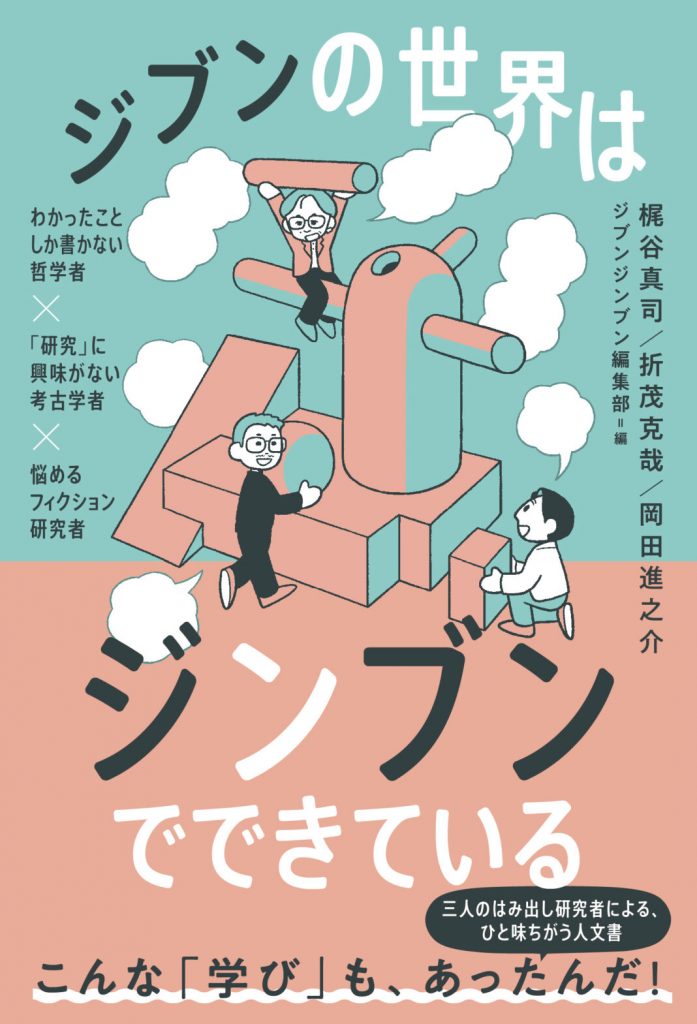
: Product name: "My World is Made of People"
Reason: Although this is only our first publication, this book is packed with the "fascination of humanities" that I want to convey. I'm proud to say that the three-way discussion format between researchers from different fields captures the "fascination of people" and "exchange of knowledge" that can only be seen in this specific format.
■ What I've learned and felt in the publishing industry: I can personally sense that
Japan's publishing distribution system (the distributor and consignment system) is reaching its limits. The current situation, where book prices are too low compared to the rising cost of raw materials and the structure supporting books through magazine revenues is collapsing, is a serious problem. (*)
At the same time, there is a truly diverse range of books in the world, and I sense the passion that goes into each book being created to reach someone. However, I also feel a sense of crisis that, in society as a whole, the act of "reading" itself is becoming a privilege reserved for a select few who have the time and mental space to do so.
*Editor's note: A distributor is a wholesaler that specializes in magazines and books. The consignment system is a sales method in which distributors entrust their inventory to bookstores, and after a certain period of time, unsold items can be returned.
Magazines are published regularly and have stable sales, so the distribution structure was based on magazine deliveries, with book deliveries piggybacking on this. However, with magazine sales and distribution volumes declining significantly in recent years, the previous way of thinking is no longer viable.
■ Recent trends in the publishing industry
While certain genres (such as AI books) are popular, I feel that the bigger trend is the change in the "form of distribution." In addition to the traditional distribution route, there is an active movement to explore new ways of delivering books, such as "direct transactions" where publishers and bookstores transact directly, and direct sales at events. (*)
*Editor's note: When publishers set up booths at events such as academic conferences or exhibitions, they sometimes sell books directly to readers without going through distributors or bookstores. This type of sales method is called direct sales
■ How the Publishing Industry Views Today's Society:
<Changing Information Acquisition Methods>
The means by which people obtain information are rapidly shifting from books and online media to generative AI and short videos. The number of readers is declining, and the competition for disposable time seems to be intensifying.
<Social Division and the Role of Books>
There seems to be a growing tendency on social media to make extreme judgments based on "0 or 1" or "black or white." However, the real world is far more complex and indivisible. Books (especially humanities books) should be able to provide a foundation for accepting such irreducible ambiguities and diverse values, such as "0.8" or "√2." I believe that it is becoming increasingly important to distance ourselves from extreme online discourse and engage in deep thought offline or through books.
■ Books I Want Tokyo University Students to Read
First of all, I'd like you to read our own books, even though I'm a little biased (laughs). I believe that a humanistic perspective enriches life, regardless of whether you're in the sciences or humanities.
Other than that, please read "your favorite books." Whether it's a business book, light novel, or picture book, there's no distinction between high and low. If you read while thinking about why the author wrote it and who it's aimed at, you can learn something from any book.
■ Message to Tokyo University Students: Your
university years are your precious time to study at your most comfortable and freest. Enjoy learning itself by attending classes and seminars that motivate you, not just to earn credits. I'm sure you'll be able to handle job hunting if you're a talented student, so I hope you'll make the most of the resources that university has to offer.
"Don't be a critic, be a creator," is what my mentor once told me.
Tokyo University students are intelligent, so I believe they're good at analyzing and critiquing things. However, I hope you'll not only use your mouth and head, but also use your hands to actually leave a mark on the world.
This doesn't have to mean writing a book; it could be starting a business, creating laws, or creating a new system. I hope you won't become cynical critics from a safe distance, but will move the world as creative practitioners, even if it's down-to-earth.
<end>
Vol.2 is scheduled to be released around the end of January.
A list of articles can be found on this page
○Planning and Management: Komaba Book Club, University of Tokyo Co-op
If you have any inquiries or comments about this project, please send them to us using this form
